

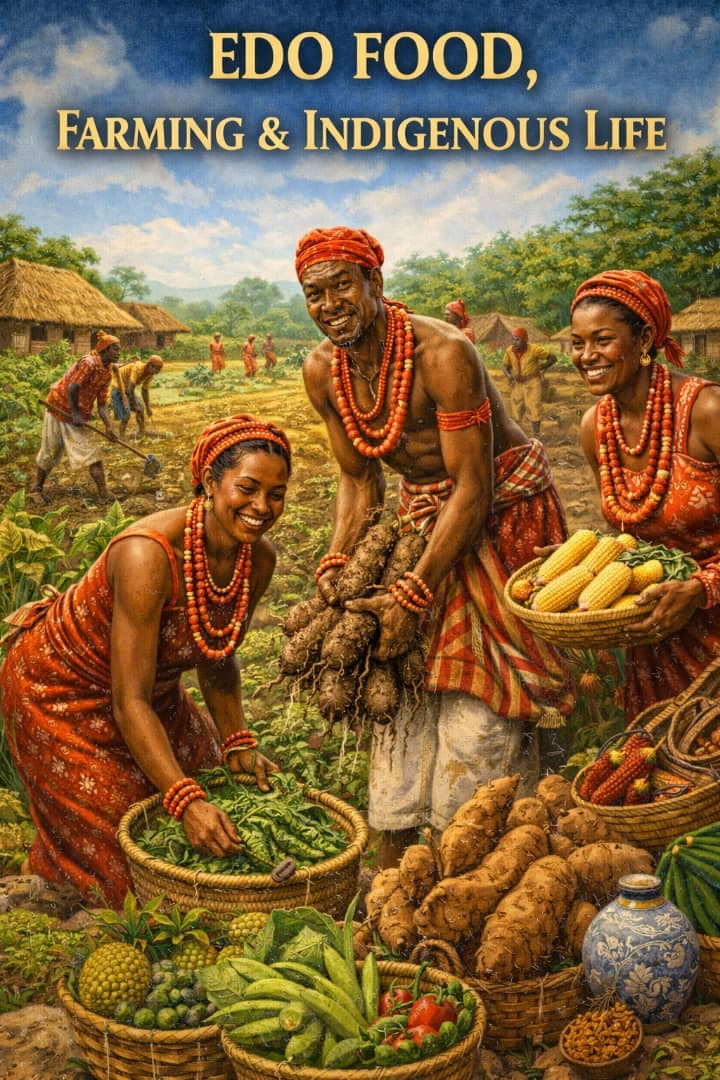
This study presents a comprehensive examination of Edo food systems, farming practices, and indigenous life, highlighting their central role in sustaining the social, economic, and spiritual foundations of Edo society. Rooted in the ecological environment of southern Nigeria, Edo agriculture developed through indigenous knowledge systems that emphasized communal land use, seasonal farming cycles, and sustainable interaction with nature. The cultivation of staple crops such as yam, cassava, cocoyam, maize, and plantain, alongside the use of forest and aquatic resources, ensured food security and supported the growth of complex social and political institutions within the Benin Kingdom.
The article further explores the organization of agricultural labor, gender roles, and complementary subsistence activities such as hunting, fishing, and gathering. It examines traditional farming tools, food processing and preservation techniques, and the rich culinary traditions that define Edo cuisine. Food is shown to function not only as nourishment but also as a powerful medium for expressing identity, hierarchy, cooperation, and hospitality. Markets and food trade emerge as vital economic and social spaces, particularly shaped by women’s participation and indigenous exchange networks.
Finally, the study analyzes the spiritual and cultural dimensions of food in Edo life, including its role in rituals, festivals, and rites of passage. It also assesses the impact of colonialism, urbanization, and modernization on traditional food systems, emphasizing the resilience and adaptability of Edo indigenous practices. By documenting these traditions in detail, the article underscores the importance of Edo food and farming knowledge for cultural preservation, education, and contemporary discussions on sustainability and indigenous heritage.





Avis
Il n’y a pas encore d’avis.