
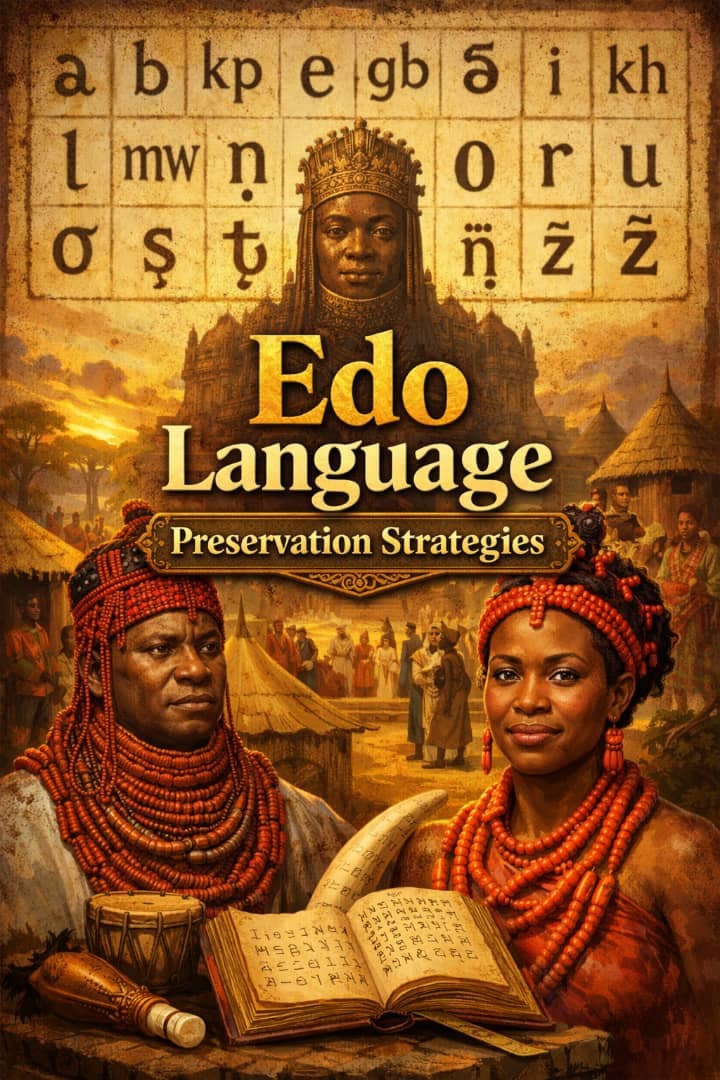
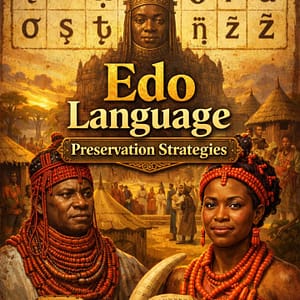
The Edo language, spoken by the Edo people of southern Nigeria, is a vital repository of cultural identity, history, and indigenous knowledge. Its decline due to urbanization, globalization, and the dominance of English poses a serious threat to the preservation of Edo heritage. This article explores the importance of safeguarding the Edo language, highlighting its role in transmitting moral values, cultural practices, social cohesion, and historical memory across generations. Preservation is presented not merely as cultural nostalgia but as an essential educational and developmental endeavor.
The study examines a comprehensive set of strategies for Edo language preservation, including family and home practices, community-driven initiatives, formal education, institutional support, and policy frameworks. Emphasis is placed on storytelling, intergenerational mentorship, festivals, and the integration of Edo into schools, curricula, and modern media platforms. The article also explores the role of technology, social media, and the diaspora in extending the reach of Edo language learning and use, demonstrating how modern tools can complement traditional practices.
Finally, the article presents a roadmap for sustainable preservation, combining grassroots engagement, educational strategies, policy initiatives, and technological innovation. It underscores that Edo language survival depends on the active participation of families, communities, institutions, and global Edo networks. By implementing these strategies, the Edo people can ensure that their language remains a living, functional, and cherished medium of communication, culture, and identity for future generations.


Avis
Il n’y a pas encore d’avis.