

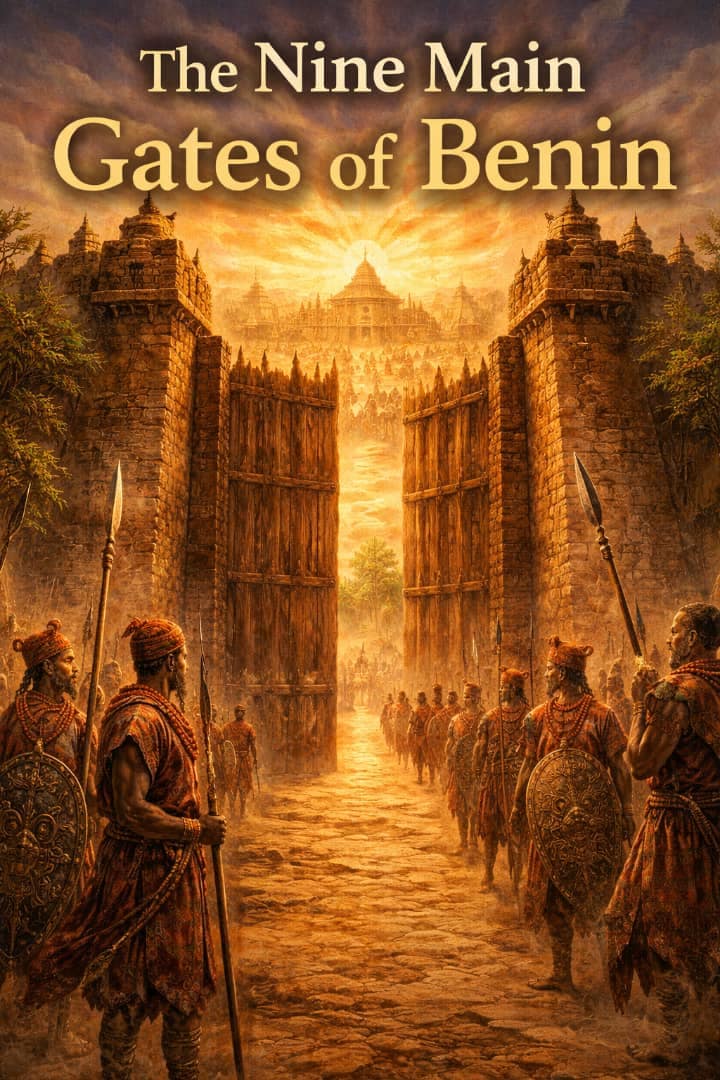
This article examines the Nine Main Gates of Benin as foundational institutions within the political, spiritual, and urban structure of the ancient Benin Kingdom.
Rather than viewing the gates as simple entry points, the study presents them as carefully designed systems of control that regulated movement, defended sovereignty, structured trade, and reinforced royal authority. Through Edo cosmology and indigenous urban planning, the gates formed a sacred network that defined the boundaries and meaning of Benin City.
Drawing on oral tradition, historical accounts, and cultural analysis, the article explores each of the nine gates in detail, highlighting their distinct roles in administration, ritual practice, military defense, economic regulation, and community identity. It demonstrates how gate chiefs, shrines, and social hierarchies transformed these spaces into living institutions where governance, spirituality, and daily life intersected.
The article further addresses the impact of colonial disruption, particularly the 1897 British invasion, which led to the physical destruction of the gates and the erosion of Benin’s sacred geography. Despite this, the study shows that the gates endure through memory, place names, festivals, and cultural consciousness, concluding that the Nine Main Gates remain powerful symbols of Edo resilience, sovereignty, and historical continuity.





Avis
Il n’y a pas encore d’avis.