
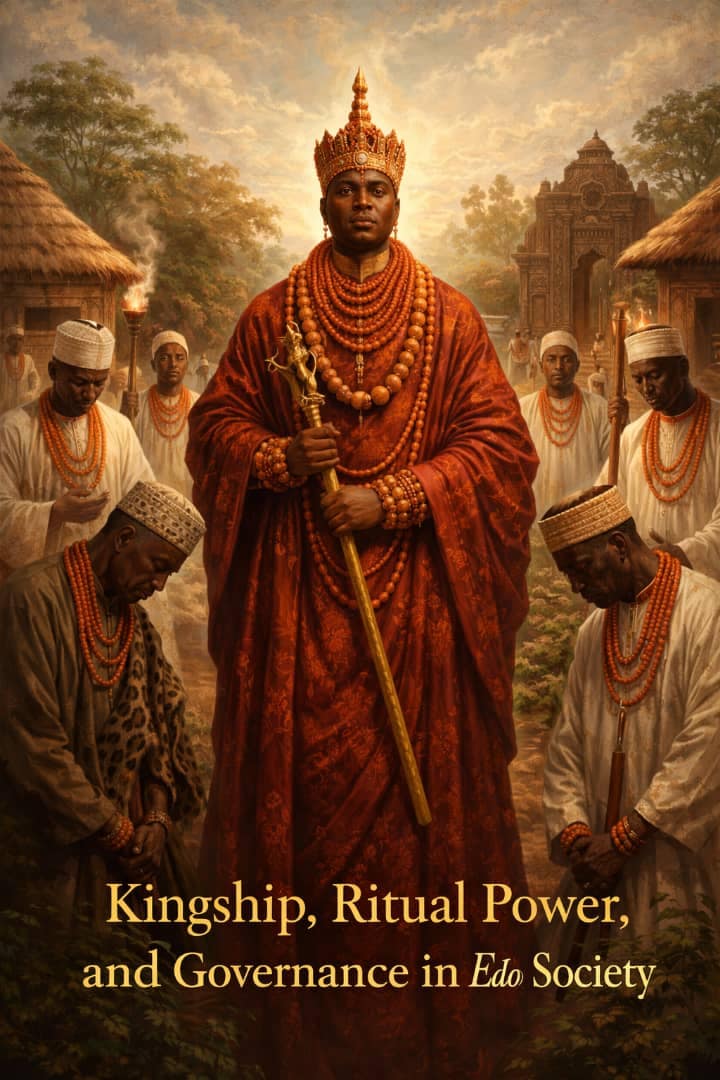
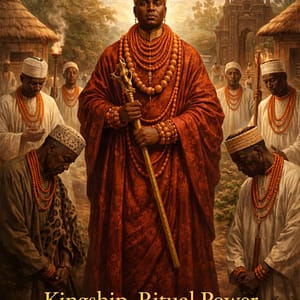
This article examines kingship, ritual power, and governance in Edo society as an integrated political and cultural system in which authority was grounded in spirituality, tradition, and collective responsibility. It analyzes the Oba of Benin not merely as a political ruler but as a sacred institution whose legitimacy derived from ancestral mandate, ritual performance, and moral stewardship. Through this lens, kingship is shown to be the spiritual axis around which Edo social, legal, and political life revolved.
The study further explores the complex governance structures that supported Edo kingship, including councils of chiefs, legal customs, economic regulation, military organization, and urban planning. These institutions ensured accountability, continuity, and effective administration, demonstrating that Edo governance was consultative rather than autocratic. Law and justice were embedded in moral and spiritual values, emphasizing harmony, restoration, and communal balance over punishment.
Finally, the article traces the impact of colonial disruption on Edo governance while highlighting the resilience and adaptation of traditional institutions in the modern era. Despite political displacement, Edo kingship endures as a powerful symbol of identity, cultural memory, and moral authority. The article concludes that Edo governance offers enduring lessons on leadership, legitimacy, and cultural continuity, affirming the strength and relevance of indigenous political systems in both historical and contemporary contexts.



Avis
Il n’y a pas encore d’avis.