
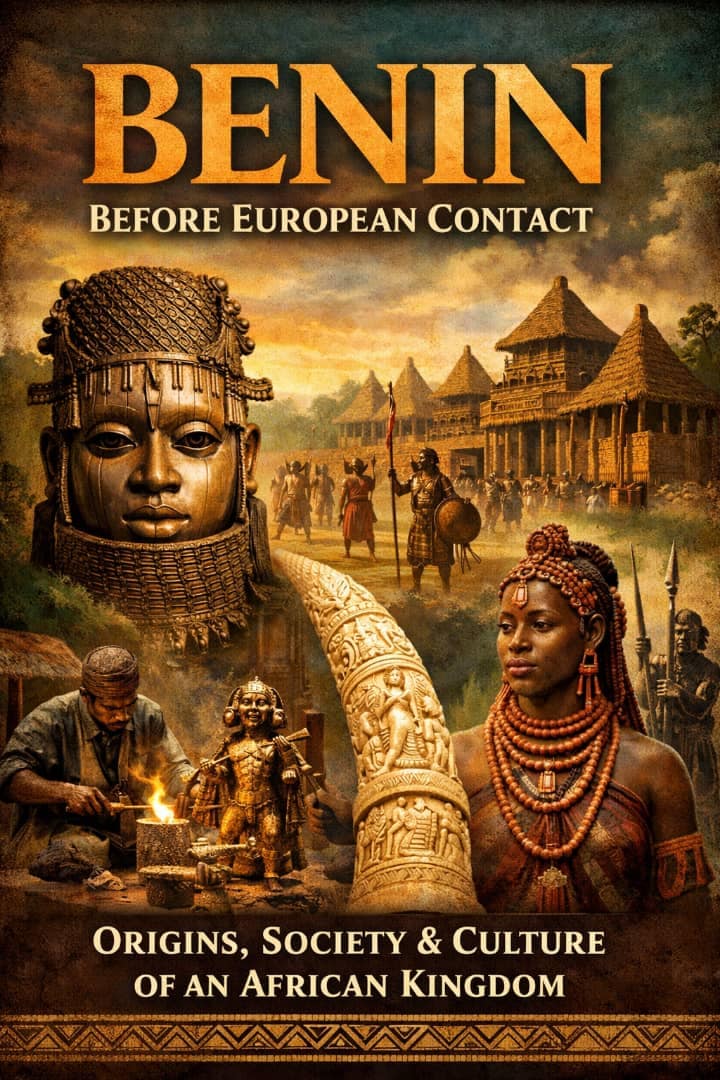
Before the arrival of European powers, the Benin Kingdom existed as a well-established, sovereign state with a highly centralized political system and deep historical roots. Emerging from the earlier Ogiso dynasty and later consolidated under the Oba system, Benin developed a sacred monarchy in which political authority, religious legitimacy, and social order were closely intertwined. The Oba governed with the support of structured councils of chiefs and guilds, creating a stable system of administration, law, and succession that ensured continuity over centuries.
Benin was also an advanced urban and economic center. Its capital, Benin City, was noted for its wide streets, organized quarters, and extensive defensive earthworks, features that impressed early visitors and contradicted later colonial stereotypes of African societies. The kingdom’s economy was diverse, combining agriculture, craft specialization, and long-distance trade. Benin maintained regulated trade networks within the region and later with foreign merchants, ensuring that economic exchange remained under royal control and supported political independence.
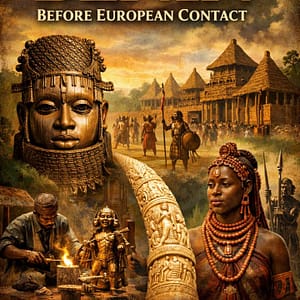
Culturally, the Benin Kingdom was distinguished by its artistic and intellectual achievements. Royal guilds produced bronze, brass, and ivory works that served as historical records, religious objects, and symbols of authority rather than mere decoration. These artworks documented court life, rituals, diplomacy, and lineage, preserving Benin’s history through visual form. Prior to European intrusion, Benin functioned as a complex, organized, and culturally rich civilization whose institutions reflected indigenous innovation and sovereignty.


Avis
Il n’y a pas encore d’avis.