

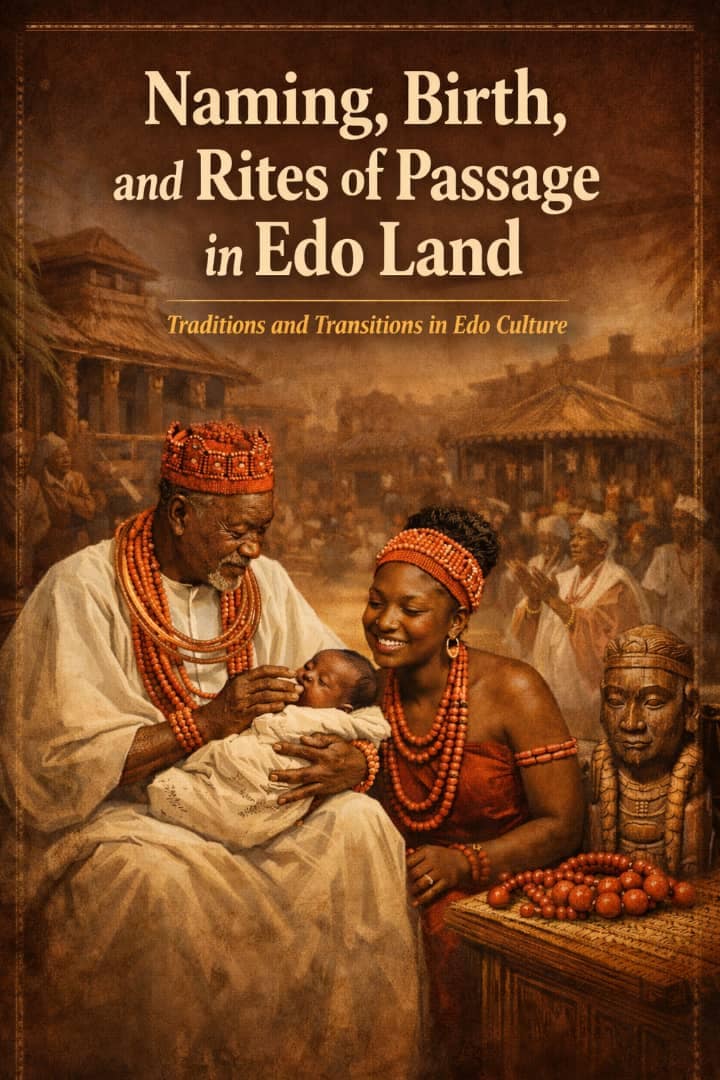
The cultural practices surrounding birth, naming, and rites of passage in Edo land reflect a profound integration of spirituality, social structure, and communal identity. Birth is regarded not merely as a biological event but as a sacred occurrence intertwined with ancestral guidance, spiritual protection, and communal responsibility. From pregnancy to delivery, Edo families observe rituals designed to safeguard both mother and child, invoking prayers, protective charms, and ancestral blessings. These early life rituals establish the foundation for the child’s identity, social role, and spiritual alignment within the lineage and community.
Naming ceremonies hold significant cultural and spiritual weight in Edo society, as names are believed to shape destiny, character, and ancestral connection. The traditional “Iru Omo” involves consultation with elders and diviners, ritual blessings, symbolic offerings, and public recognition of the child’s place in the family and community. These ceremonies not only provide spiritual protection but also reinforce communal ties, intergenerational knowledge, and moral instruction. The selection of names reflects a careful balance between ancestry, spirituality, and contemporary influences, illustrating the dynamic nature of Edo cultural practices.
Rites of passage, spanning childhood, puberty, and adulthood, further structure individual growth within Edo society. These rituals guide moral, ethical, and social development, linking personal maturation with communal obligations and ancestral oversight. While modernization, urbanization, and religious influences have introduced adaptations, the core values of spiritual protection, social integration, and cultural continuity remain intact. Through detailed case studies, regional variations, and scholarly reflections, this article demonstrates the enduring relevance of Edo life-cycle rituals, highlighting their role in preserving cultural identity, strengthening community bonds, and ensuring the intergenerational transmission of knowledge and tradition.



Avis
Il n’y a pas encore d’avis.