
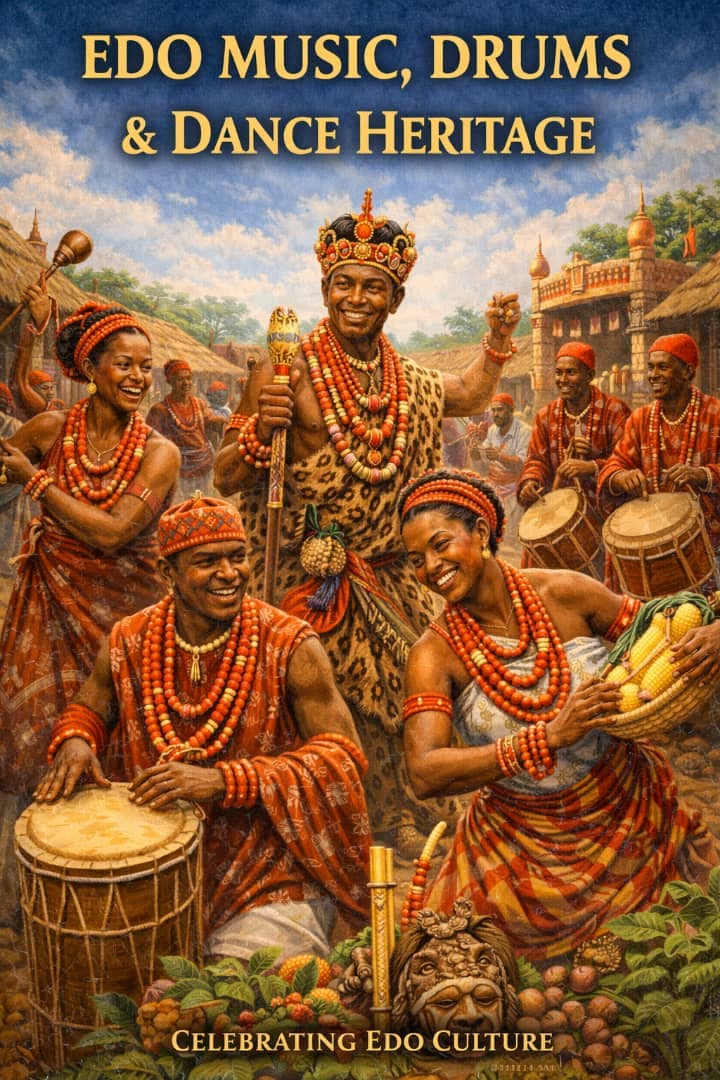
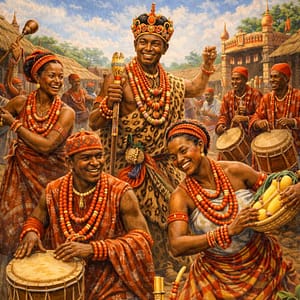
Edo music, drums, and dance heritage form a cornerstone of the cultural identity of the Edo people of southern Nigeria. Rooted in the history of the Benin Kingdom, these traditions encompass a wide range of musical instruments, drumming patterns, and dance forms that are integral to religious ceremonies, royal court functions, communal festivals, and everyday life. Drums, including the Iyokpa, Egu, and Ogido, serve not only as rhythmic instruments but also as tools for communication, spiritual invocation, and storytelling, while dance movements often narrate historical events, ancestral legends, and moral lessons. Together, music and dance provide a dynamic medium through which the Edo people preserve their history, values, and social cohesion.
This heritage is expressed through diverse forms such as ritual music, folk songs, masquerade performances, and ceremonial dances, with each form reflecting regional variations, social context, and specific functions. Festivals like the Igue and Ugie highlight the intricate interplay between drumming, singing, and dance, emphasizing royal authority, spiritual reverence, and communal participation. Edo music is also characterized by polyrhythmic structures, call-and-response singing, and the integration of vocal and instrumental improvisation, demonstrating both technical sophistication and cultural depth.
In contemporary times, Edo music and dance continue to evolve while maintaining their traditional roots. Modern adaptations, fusion with Afrobeat, Highlife, Gospel, and digital media, as well as cultural preservation initiatives, ensure that Edo heritage remains vibrant and accessible to younger generations. By sustaining these traditions through both innovation and transmission, Edo music, drums, and dance not only preserve a rich cultural legacy but also inspire a sense of identity, pride, and continuity within the Edo community and beyond


Avis
Il n’y a pas encore d’avis.