
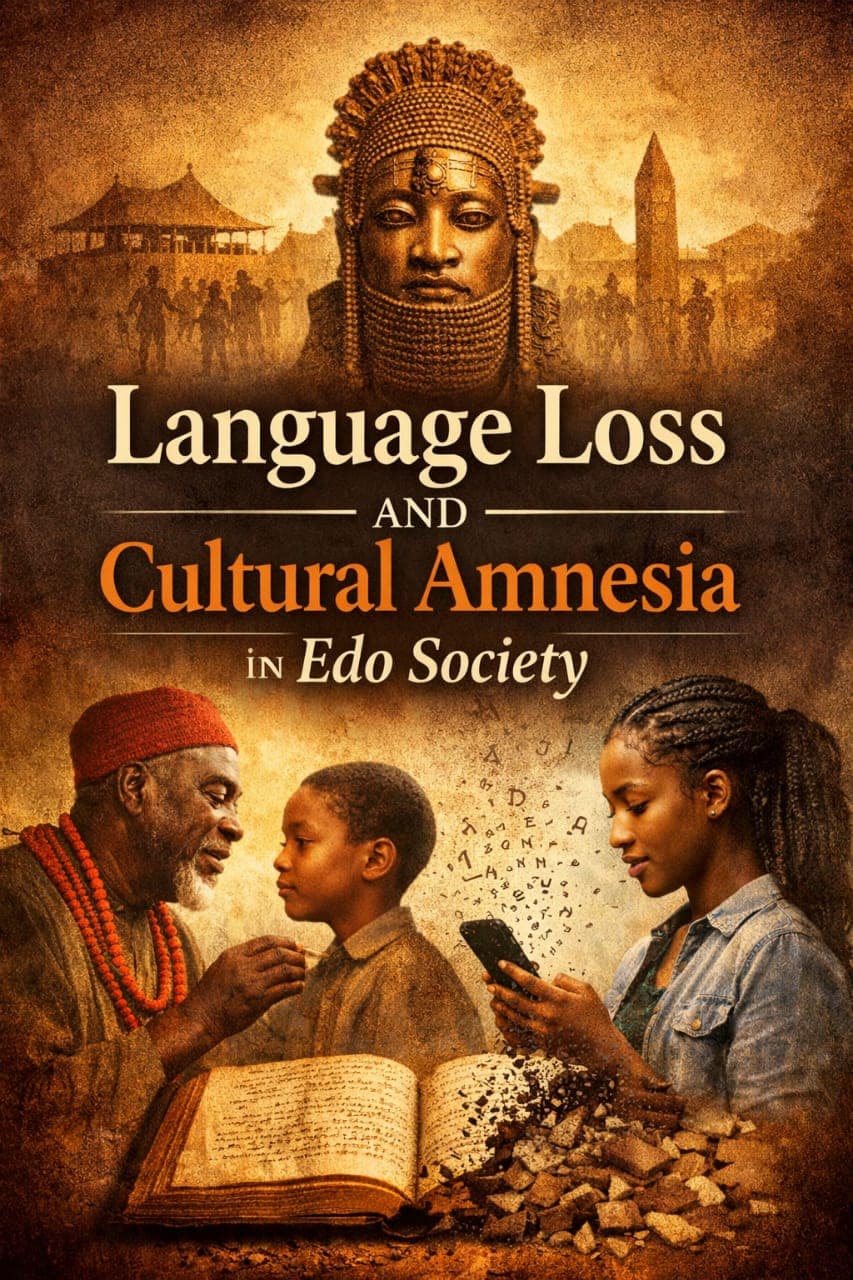
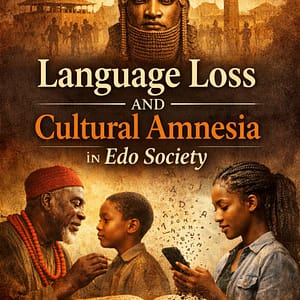
Language functions as the primary vessel of cultural memory, identity, and continuity within societies. In Edo society, the Edo language has historically preserved oral histories, moral philosophies, spiritual practices, and systems of governance rooted in the legacy of the Benin Kingdom. This article examines how the gradual decline of Edo language use has contributed to cultural amnesia, a process through which collective memory, indigenous knowledge, and social cohesion are eroded as linguistic transmission weakens.
Drawing on historical and sociolinguistic perspectives, the study traces the roots of language loss in Edo society to colonial linguistic domination, post-colonial education policies, urbanization, and the growing influence of globalization and digital media. It explores how the marginalization of Edo language in formal education, religious institutions, and public life has disrupted intergenerational communication, diminished traditional authority structures, and weakened indigenous knowledge systems, particularly in areas of history, environmental understanding, and traditional medicine.
The article argues that language revitalization is essential for reversing cultural amnesia in Edo society. It emphasizes community-based transmission, educational reform, digital engagement, and the leadership role of traditional institutions as critical strategies for recovery. By reclaiming the Edo language as a living medium of expression, Edo society can restore cultural memory, strengthen identity, and ensure the continuity of its heritage for future generations.


Avis
Il n’y a pas encore d’avis.