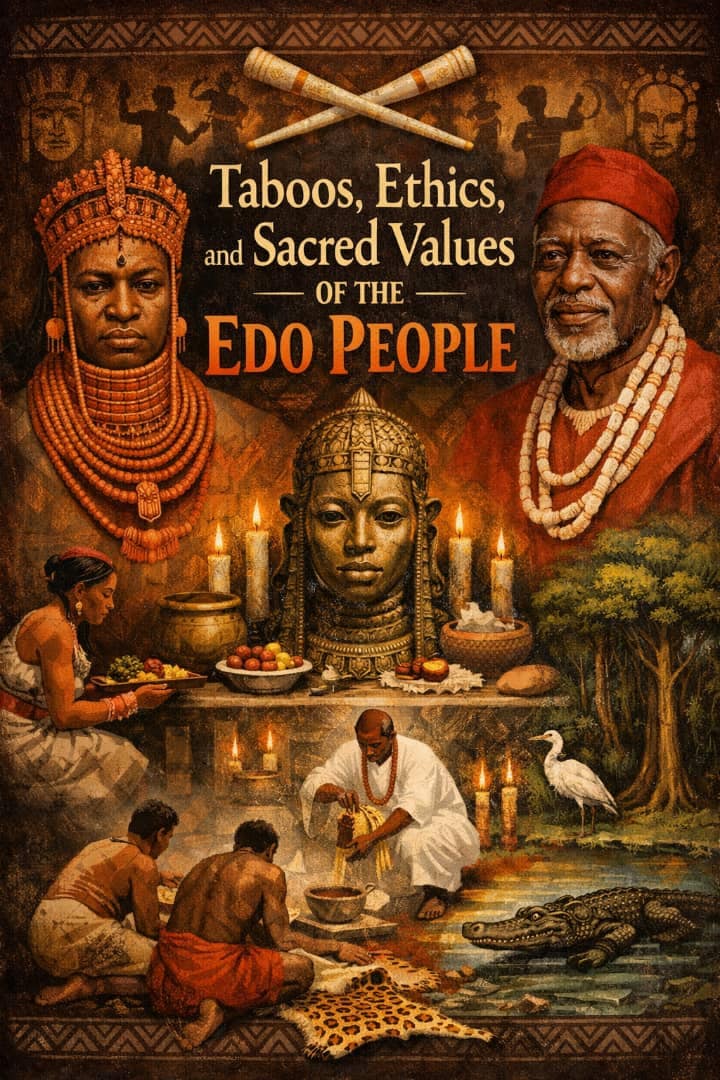
Taboos, ethics, and sacred values are central to Edo society, providing a framework that regulates behavior, maintains social cohesion, and sustains spiritual accountability. Taboos delineate forbidden actions, protecting individuals and communities from harm, while ethical codes guide moral conduct, emphasizing honesty, respect, humility, and communal responsibility.
Sacred values connect the living to ancestors, deities, and the spiritual realm, reinforcing both moral and social obligations. Together, these principles preserve Edo identity, culture, and communal harmony.
The transmission of these cultural principles occurs through multiple channels, including family mentorship, elder guidance, community rituals, age-grade systems, and participation in festivals. Storytelling, proverbs, and ceremonial practice provide experiential learning, ensuring that youth internalize moral, ethical, and spiritual lessons. Elders and cultural custodians play a critical role, mediating between the spiritual and human worlds and enforcing compliance through guidance, ritual, and social sanction.
Modern challenges such as urbanization, Western education, digital media, and economic pressures have altered traditional methods of teaching and enforcing these values. Edo society has adapted through schools, cultural workshops, mentorship programs, and online platforms, ensuring continuity and relevance. These strategies allow sacred values, ethics, and taboos to remain living principles that guide personal conduct, reinforce communal bonds, and sustain cultural identity for future generations.



Avis
Il n’y a pas encore d’avis.