

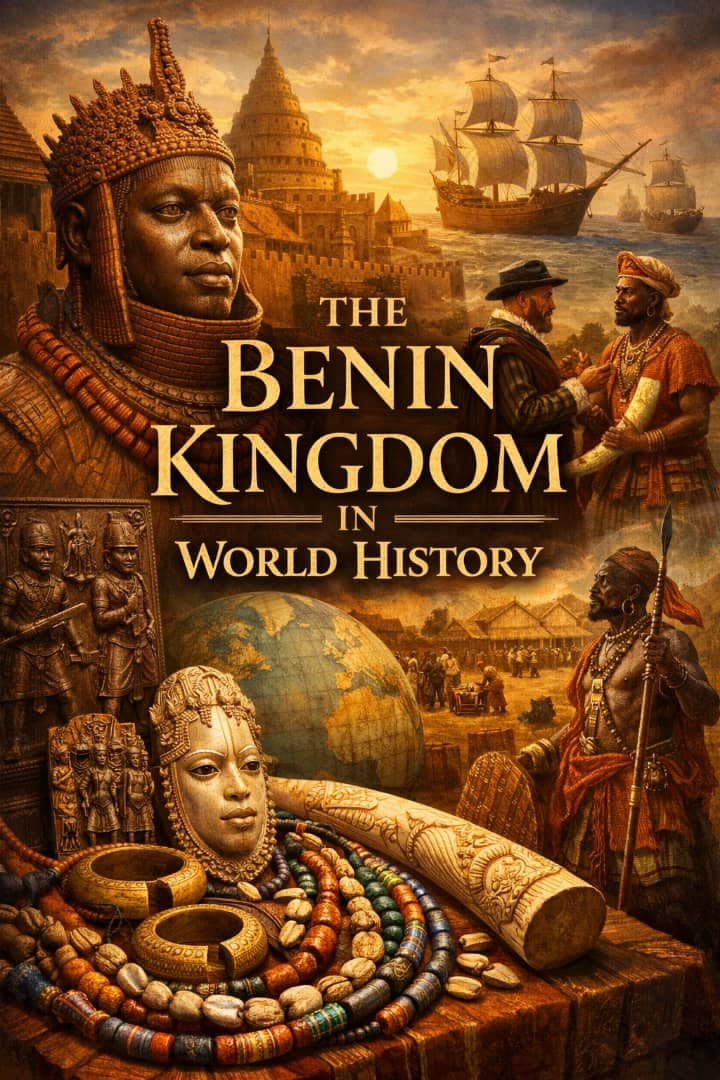
The Benin Kingdom, located in present-day southern Nigeria, was a highly organized and influential precolonial African state. From its origins under the Ogiso dynasty to the centralization under the Oba monarchy, Benin developed sophisticated political, military, and administrative systems. Its rulers combined secular authority with spiritual leadership, ensuring social cohesion, territorial expansion, and control over regional trade networks. The kingdom’s strategic location near the Niger Delta facilitated commerce, enabling Benin to engage with neighboring African polities and European traders while maintaining sovereignty.
Benin’s cultural and artistic achievements are central to its historical significance. The kingdom is renowned for the Benin Bronzes, ivory carvings, ceremonial regalia, and architectural masterpieces, which reflect advanced metallurgical skills, symbolic sophistication, and deep spiritual meaning. These artifacts were integral to religious rituals, political legitimacy, and historical commemoration, while also influencing global perceptions of African artistry. Benin’s sacred sites, palaces, and urban planning further highlight the integration of governance, culture, and spirituality in a thriving civilization.
The kingdom’s interactions with European powers, particularly during the trans-Atlantic trade era and the 1897 British Punitive Expedition, positioned Benin within global historical narratives. Colonial disruptions, looting of artifacts, and subsequent restitution debates underscore its enduring significance in cultural heritage and international discourse. Today, Benin’s legacy continues to educate, inspire, and influence global scholarship, art, and cultural preservation, emphasizing the kingdom’s central role in both African and world history.




Avis
Il n’y a pas encore d’avis.