
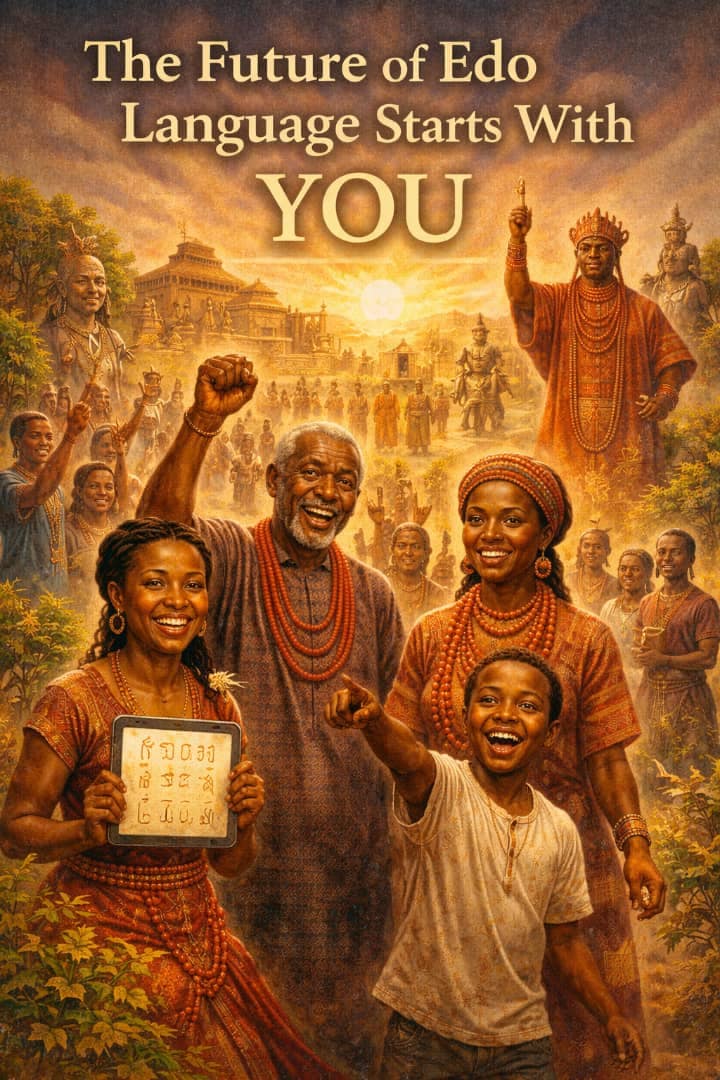
This article examines the future of the Edo language by emphasizing individual responsibility as the foundation of language survival. It explores the deep connection between Edo language and cultural identity, showing how everyday choices in homes, communities, and public spaces determine whether the language continues as a living system or declines into symbolic use.
The study highlights practical strategies for preservation, focusing on family language use, youth engagement, education, media, creativity, and technology. It demonstrates that Edo can remain relevant in modern life when it is actively spoken, written, taught, and creatively expressed, rather than confined to tradition or ceremony alone.
Finally, the article considers the roles of traditional institutions, leadership, policy, and community action in supporting long-term sustainability. It concludes that while institutions can strengthen preservation efforts, the survival of the Edo language ultimately depends on collective individual commitment, affirming that its future truly starts with everyday speakers.




Avis
Il n’y a pas encore d’avis.