
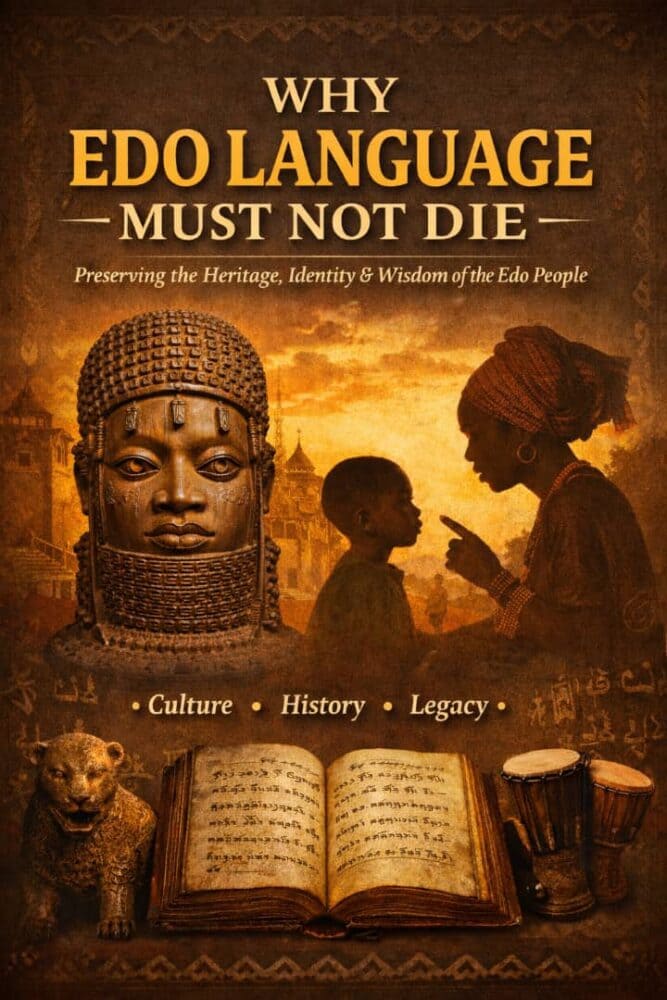
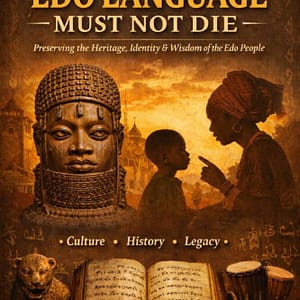
The Edo language is a fundamental pillar of the Edo people’s cultural identity, historical continuity, and worldview. Rooted in the ancient Benin Kingdom, the language has for centuries served as the medium for governance, spirituality, moral instruction, artistic expression, and indigenous knowledge transmission. However, the combined forces of colonial legacy, globalization, urbanization, and the dominance of English have placed the Edo language under serious threat. As intergenerational transmission weakens, the language faces gradual erosion, raising urgent concerns about cultural loss and identity dilution.
This article examines the profound significance of the Edo language beyond communication, emphasizing its role as a carrier of culture, moral philosophy, social order, spirituality, and indigenous knowledge systems. It explores how Edo encodes traditional values, environmental wisdom, ritual practices, oral literature, and communal ethics that cannot be fully preserved or expressed through foreign languages. The study also highlights the psychological, social, and spiritual consequences of language decline, including cultural alienation, generational disconnection, and the weakening of traditional institutions.
The article argues that preserving the Edo language is a cultural, moral, and historical responsibility that requires deliberate action from families, communities, educational institutions, and government. Through education, media engagement, technology, policy support, and renewed cultural pride, the Edo language can be revitalized and sustained in a modern, globalized world. Ensuring its survival safeguards not only linguistic diversity but also the heritage, dignity, and future of the Edo people


Reviews
There are no reviews yet.