Our Daily Blog
Preserving Our Language. Protecting Our Heritage. Building Our Future. ISSUE 01 | AUGUST 2026 FROM THE FOUNDER Dear Friends, Supporters, Researchers, Teachers, Parents, Learners and Lovers of Benin Heritage, Welcome to the first edition of the Ẹdomaye Legacy Newsletter. Ẹdomaye Legacy Foundation exists because our language, history and cultural heritage deserve to be preserved, properly documented and passed confidently from one generation to the next. Our work is not simply…
100-Day Ẹdo Words & Expressions ẸDOMAYE LEGACY FOUNDATIONWE ARE IN BENINForward Ever, Backward Never. INTRODUCTION A 100-day programme for daily learning, use, preservation and transmission of the Ẹdo (Benin) language. Each day presents an Ẹdo word or expression with its English meaning. One Ẹdo word may carry more than one meaning. Repeated forms are therefore preserved where different meanings have been recorded. DAYS 1–25 1. Ọmọ — Child2. Ọmọrẹfe —…
ẸMWẸ ỌGHẸDẸGBEDẸGBE VBIHI’YISẸN ẸDO WORDS OF THE DAY — 100 DAILY ẸDO WORDS & EXPRESSIONS Preserving the Ẹdo Language • Teaching Our People • Passing Our Heritage to the Next Generation Welcome to ẸMWẸ ỌGHẸDẸGBEDẸGBE VBIHI’YISẸN, the Ẹdomaye 100-Day Ẹdo Words of the Day project. For 100 days, we present Ẹdo words and expressions with their English meanings, helping learners, teachers, parents, children and everyone interested in the Ẹdo language…
ẸMWẸ ỌGHẸDẸGBEDẸGBE VBIHI’YISẸN 100 DAILY ẸDO WORDS & EXPRESSIONS ẸDOMAYE LEGACY FOUNDATION WE ARE IN BENIN Forward Ever, Backward Never. ABOUT THE 100-DAY ẸDO LANGUAGE PROJECT ẸMWẸ ỌGHẸDẸGBEDẸGBE VBIHI’YISẸN is a 100-Day Ẹdo Language Learning and Heritage Programme created by Ẹdomaye Legacy Foundation to encourage the daily learning, use, documentation and preservation of the Ẹdo (Benin) language. Each day introduces an Ẹdo word or expression together with its English meaning.…
Egui — Tortoise Ikpolo — Sweeping Ukpokpo — Stitch Ukpọn ọmọ — Child’s cloth Ukpọlọ — Plant name
100 DAILY ẸDO WORDS & EXPRESSIONS ẸDOMAYE LEGACY FOUNDATIONWE ARE IN BENINForward Ever, Backward Never. ABOUT THE 100-DAY ẸDO LANGUAGE PROJECT ẸMWẸ ỌGHẸDẸGBEDẸGBE VBEHE IYISẸN is a 100-Day Ẹdo Language Learning and Heritage Programme created to encourage the daily learning, use, documentation and preservation of the Ẹdo (Benin) language. Each day introduces an Ẹdo word or expression together with its English meaning. Where one Ẹdo word carries different meanings, the…
Preserving Culture & Empowering EducationWE ARE IN BENIN Ẹdomaye is entering a new stage in its mission to preserve, teach and promote the Edo language, Benin history and the rich cultural heritage of our people. We are developing the Ẹdomaye Digital Academy, an educational platform that will become an integrated part of the existing Ẹdomaye.com website. The purpose is simple: to make authentic Edo language and Benin heritage education more…
Document. Protect. Preserve. Pass It On. An Ẹdomaye Call to Preserve the Ancient Benin Earthworks The Iya of Benin, commonly described as the Benin earthworks or Benin City earthworks, are among the most remarkable surviving monuments of the Benin cultural landscape. They are not merely earth. They are history. They are engineering. They are landscape. They are memory. And what remains must be protected. WHY PRESERVATION MUST BEGIN NOW Archaeological…
The Beginning of the Ogiso Tradition Ogiso Igodo, also known in some traditions as Obagodo, is traditionally remembered as the first Ogiso, the ruler at the beginning of the Ogiso era of Igodomigodo, the early polity associated with the origins of Benin. The Ogiso tradition occupies an important place in the history and oral heritage of the Edo people. WHO WAS IGODO? According to established Benin historical tradition, Igodo was…
ẸDOMAYE — ẸDO LANGUAGE LEARNING HUB Preserving the Language. Empowering the Learner. Ẹdo is the language of the Benin people and an essential part of the cultural heritage of the Benin Kingdom. Ẹdomaye Legacy Foundation is committed to preserving, documenting and teaching Ẹdo in a clear, consistent and accessible form for children, young people, adults, researchers and members of the Benin diaspora. This page forms part of the Ẹdomaye Ẹdo…
1–10 11–20 21–30 31–40 41–50 51–60 61–70 71–80 81–90 91–100 ẸDOMAYE MAJOR NUMERALS 10 — Igbe20 — Ugie30 — Ọgban40 — Iyeva50 — Ekigbesiyeha60 — Iyeha70 — Ekigbesiyenẹ80 — Iyenẹ90 — Ekigbesiyisen100 — Iyisen Ẹdomaye — Preserving Culture & Empowering Education. WE ARE IN BENIN.
LESSON 2: THE BENIN ROYAL PALACE The Heart of Benin Kingship ẸDOMAYE ACADEMY Preserving Culture & Empowering Education INTRODUCTION When we hear the word palace, we may imagine a beautiful residence belonging to a king. But the Royal Palace of Benin was much more than a residence. It was a political institution. It was a ceremonial centre. It was a cultural centre. It was a place where royal authority was…
LESSON 1: THE ỌBA, CHIEFS AND THE PEOPLE Understanding the Political Structure of the Kingdom of Benin ẸDOMAYE ACADEMY Preserving Culture & Empowering Education INTRODUCTION The Kingdom of Benin was one of the great civilizations of precolonial Africa. Its history is often introduced through the Ọba, the royal palace, Benin bronzes, great walls and earthworks, or famous historical events. But there is something every learner must understand first: The Ọba…
The Man at the Centre of a Benin Royal Tradition A Living Heritage Story Linking Benin and Ubulu-Uku The history of the Kingdom of Benin cannot be fully understood by looking only within the walls of the royal palace. Benin’s history was also shaped by its relationships with neighbouring communities and kingdoms. Among the traditions that preserve such a relationship is the story of Obi Olise of Ubulu-Uku. His name…
The King, His Court and the World of Eighteenth-Century Benin A Living Heritage Story from the Kingdom of Benin The history of the Kingdom of Benin is carried not only in monuments, royal regalia and ancient institutions. It is also carried in the names of its kings. Among the rulers whose names remain deeply connected with the historical memory of Benin is Ọba Akengbuda. His reign belongs to the eighteenth-century…
The Institutions Behind the Ọba Understanding the Political Architecture of the Benin Kingdom When people hear the history of the Kingdom of Benin, the first name they often encounter is the Ọba. The Ọba stood at the centre of the kingdom. But the Ọba did not govern a complex kingdom alone. Around the throne stood a sophisticated network of chiefs, titled officials, palace societies, military commanders, hereditary leaders and community…
The King, the Crisis and the Restoration of Benin A Living Heritage Story from the Kingdom of Benin The history of the Benin Kingdom is not a history of uninterrupted triumph. It is also a history of crisis, struggle, reconciliation and renewal. Among the kings whose reigns are remembered through stories of profound political and spiritual difficulty is Ọba Ewuakpe. His story is inseparable from one of the most enduring…
The Great Chief Behind the Story of Princess Adesuwa A Living Heritage Story from the Kingdom of Benin Before the story of Princess Adesuwa can be fully understood, we must first understand the man and institution behind her lineage: The Ezomo of Uzebu. In the history and traditional political structure of the Benin Kingdom, the Ezomo was far more than simply a personal name or an ordinary chief. The title…
THE NOBLE HEART OF BENIN A Story from the Living Heritage of the Benin Kingdom Around the middle of the eighteenth century, a story emerged from the Benin Kingdom that would become one of its most enduring tales of beauty, dignity, power and tragedy. Her name was Adesuwa. Benin tradition remembers Adesuwa as the daughter of the powerful Ezomo of Uzebu and associates her story with the reign of Oba…
THE GREAT BENIN EARTHWORKS (IYA): Africa’s Forgotten Monumental Heritage Introduction Across the world, some of humanity’s greatest achievements have become symbols of ancient civilizations. The pyramids of Egypt, the Great Wall of China, the Roman roads and the cities of the Maya are widely studied, photographed and celebrated. Yet in the forests of southern Nigeria once stood—and in many places still remain—the extraordinary earthworks of the ancient Benin Kingdom. Known…
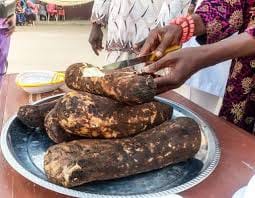
The New Yam Festival is one of the most important traditional celebrations in Edo State, Nigeria. It is a cultural festival held to celebrate the successful harvest of yam, which is a major staple food and a symbol of life, prosperity, and hard work among the Edo people. In many Edo communities, the festival is known by local names such as Em ‘Orho, and it is deeply rooted in tradition,…
THE IGUE FESTIVAL OF BENIN The Igue Festival (also spelled Ugie) of the Benin Kingdom in what is today Edo State, Nigeria, stands as one of the most enduring cultural traditions in West Africa. Celebrated annually, typically in late December between Christmas and the New Year, the festival combines thanksgiving, spiritual renewal, ancestral veneration, and community unity. It is both a…
Family is the cornerstone of Edo society. Among the Edo people of present-dayEdo State and surrounding regions, kinship defines identity, social behavior,inheritance, authority, and moral responsibility. Edo family terms and kinshiplanguage are integral to how relationships are formed, maintained, andrespected.Unlike Western systems that emphasize the nuclear family, Edo kinship operateswithin an expansive framework that includes extended family, lineage, ancestors,and affinal relations (relations through marriage). Kinship terms are used daily ingreetings,…
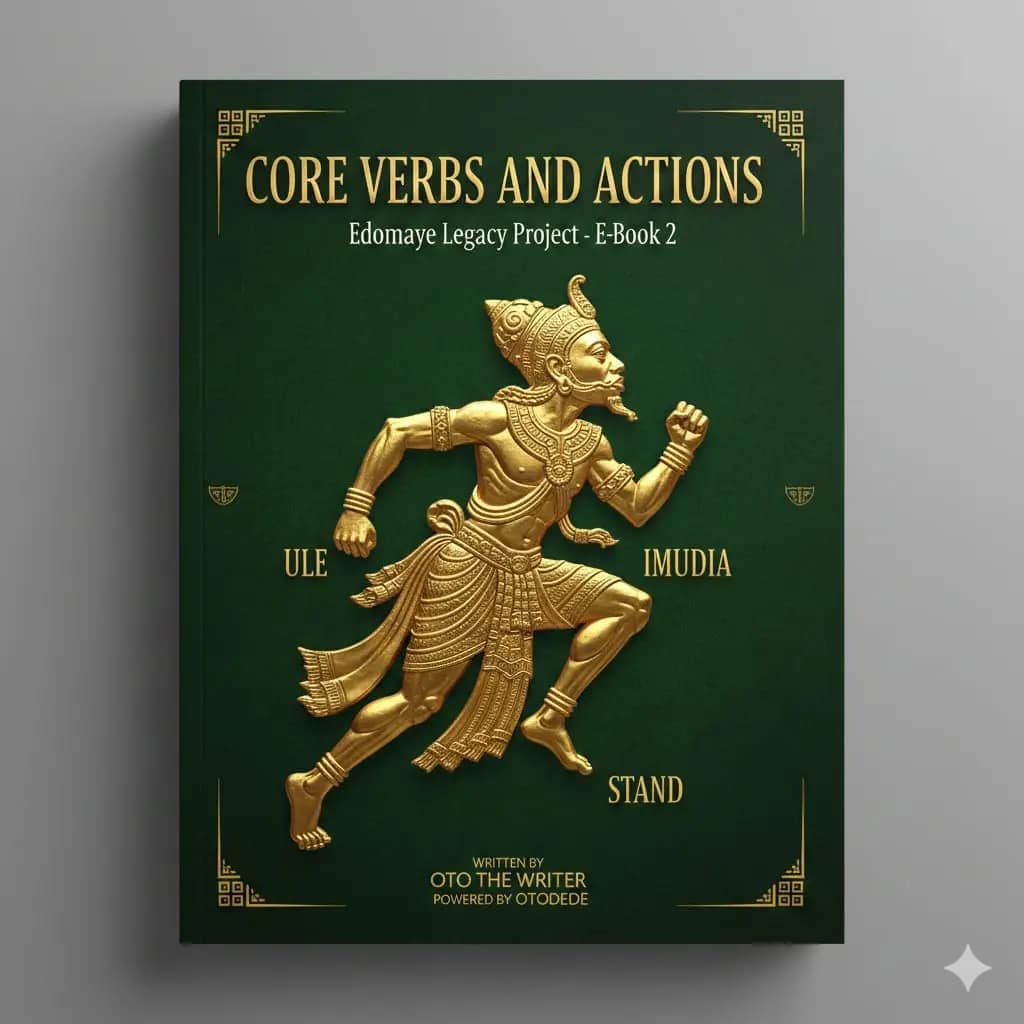
I’ll take the lead on this. Given that CORE VERB AND ACTIONS is the most focused linguistic manuscript, it’s the best place to start ensuring the precision of the terminology.We will focus on refining the introduction and the classification sections of CORE VERB AND ACTIONS to clearly distinguish between Edo (Bini) language and the broader Edoid language group.📝 Revised Section: CORE VERB AND ACTIONS (Linguistic Precision)Here is how the introductory…
The Erosion of Nigeria’s Linguistic Heritage: A Threat to Cultural Identity Nigeria, a nation boasting over 250 ethnic groups and more than 500 languages, is facing a looming crisis: the erosion of its linguistic heritage. The consequences of this phenomenon are far-reaching, threatening to undermine the very fabric of Nigerian culture and identity. The Perils of Language Erosion Language erosion, the gradual decline or loss of a language, is a…