
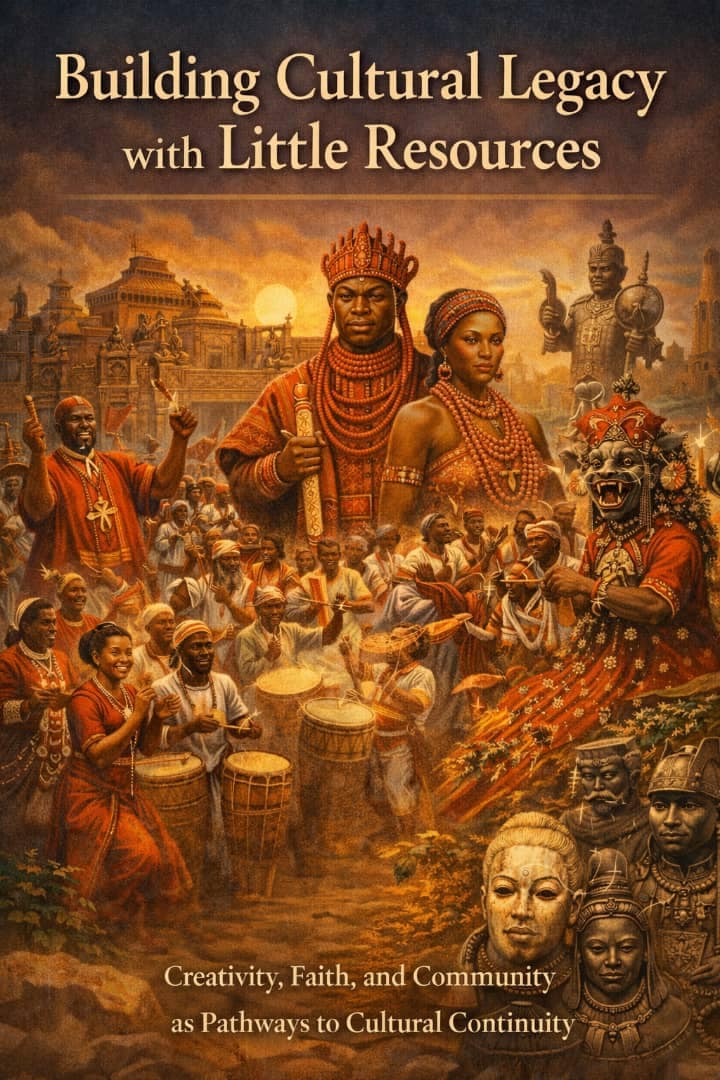
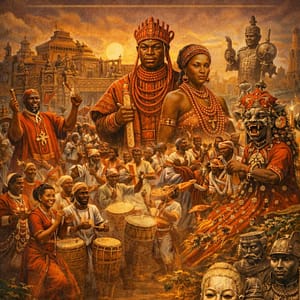
This article explores how cultural legacy can be built and sustained despite limited material resources, challenging the belief that cultural preservation depends on wealth or formal institutions. It argues that culture survives primarily through intentional human practice, shared values, and everyday social interactions rather than through physical infrastructure.
Focusing on family and community as the core foundations of cultural continuity, the article highlights the roles of language use, storytelling, rituals, moral systems, creativity, and faith in transmitting identity across generations. These practices require minimal resources yet function as powerful tools for preserving history, worldview, and communal belonging.
The article further examines modern challenges such as globalization, urbanization, religious change, and digital influence, showing how they can be adapted rather than resisted. It concludes that sustainable cultural legacy emerges from simplicity, collective responsibility, and intergenerational engagement, proving that scarcity can become a source of cultural strength rather than loss.



Reviews
There are no reviews yet.