

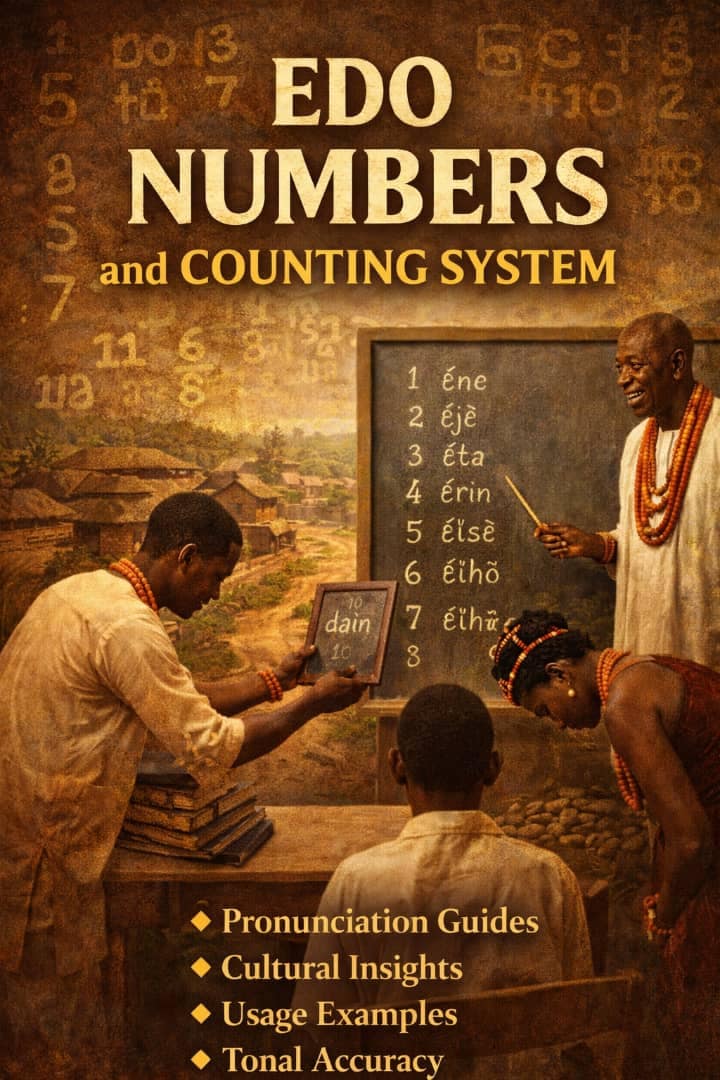
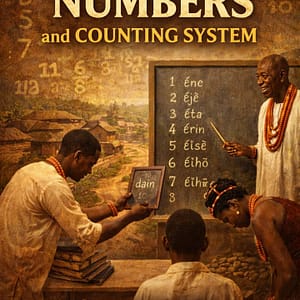
Numbers are an essential aspect of Edo culture, serving not only as tools for counting and trade but also as markers of social structure, ceremonial precision, and cultural identity. This article explores the Edo numbers and counting system in depth, from basic numbers 1–10 to hundreds, thousands, and beyond, highlighting pronunciation, tonal patterns, and combinatory rules critical for accurate communication.
The work examines practical applications of numbers in daily life, including counting objects, people, money, and time, as well as in rituals, festivals, and market transactions. It emphasizes the importance of both cardinal and ordinal numbers and provides exercises, dialogue examples, and role-play scenarios to ensure learners achieve fluency and cultural competence.
Finally, the article underscores the cultural significance of mastering Edo numbers, showing how they preserve heritage, enforce respect, and strengthen social cohesion. By combining linguistic accuracy with cultural context, learners can communicate effectively while maintaining the richness and continuity of Edo traditions.


Reviews
There are no reviews yet.