
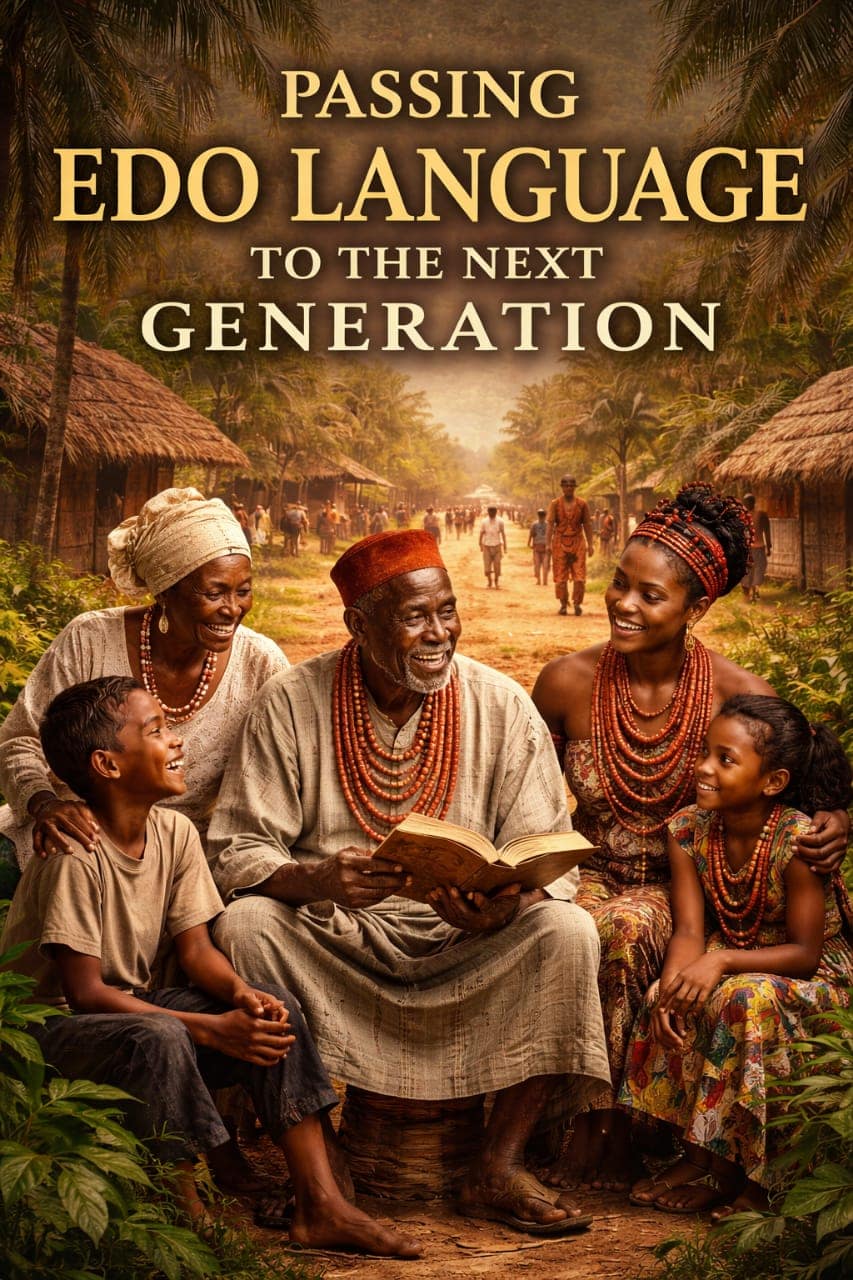
This article examines the critical importance of passing the Edo language to the next generation in the face of globalization, urbanization, and the dominance of foreign languages in education and public life. The Edo language is presented as a core pillar of Edo identity, carrying historical memory, cultural values, and indigenous knowledge developed over centuries. The article situates current language decline within the historical context of colonial disruption and postcolonial language policies that have marginalized indigenous languages.
The study explores the major challenges confronting intergenerational transmission of Edo, including reduced use of the language within families, limited presence in formal education, negative societal attitudes, and the influence of global media. It highlights the central roles of parents, schools, elders, and community institutions in language preservation, emphasizing that early childhood exposure and consistent daily use are essential for sustaining fluency and cultural continuity.
The article argues that successful transmission of the Edo language requires a coordinated, multi-level approach involving family commitment, educational reform, media engagement, technological innovation, community participation, and supportive government policies. Rather than viewing indigenous language preservation as opposing modernity, the article presents Edo language revitalization as a foundation for cultural pride, identity formation, and sustainable development in a globalized world.


Reviews
There are no reviews yet.