
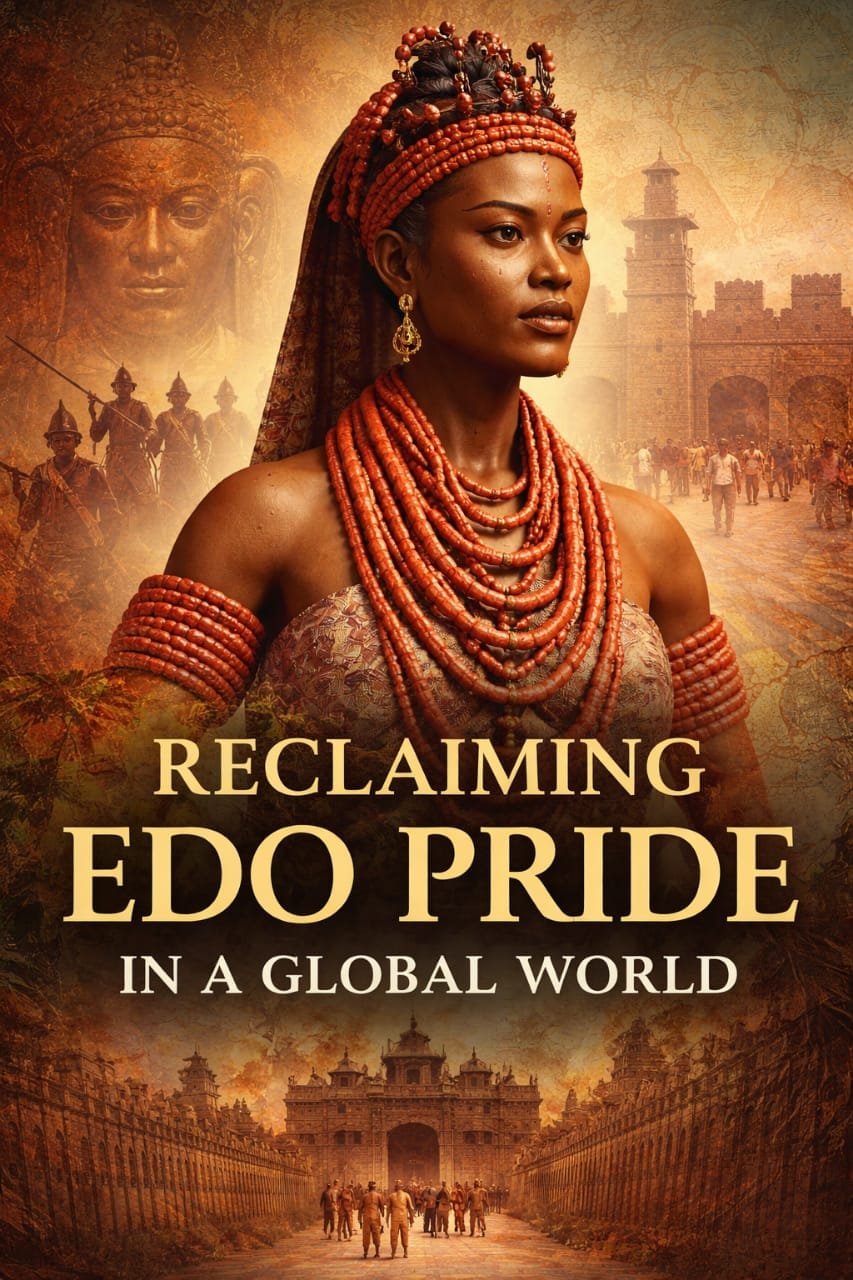
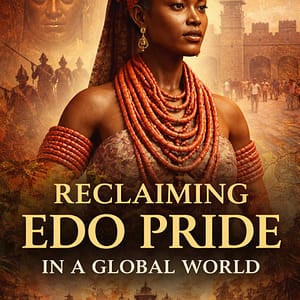
In an era of rapid globalization, indigenous cultures face increasing pressure from cultural homogenization, language loss, and distorted historical narratives. This article examines the imperative of reclaiming Edo pride in a global world, situating the Edo people of southern Nigeria within broader debates on identity, heritage, and modernity. Drawing from historical, cultural, and socio-political perspectives, it explores how colonial disruption, postcolonial neglect, and global cultural dominance have challenged the continuity of Edo identity while also creating new spaces for cultural reassertion.
The article analyzes key pillars of Edo pride, including history, language, art, spirituality, education, and governance. It emphasizes the central role of the Benin Kingdom as a symbol of pre-colonial sophistication and cultural excellence, highlighting the importance of Edo language preservation, heritage restitution, indigenous knowledge production, and cultural representation. Particular attention is given to the role of education, media, and the creative economy in shaping contemporary expressions of Edo identity and empowering younger generations to view their heritage as a source of strength rather than limitation.
Ultimately, the article argues that reclaiming Edo pride is not a rejection of globalization but a strategic engagement with it. By leveraging global platforms, diaspora networks, digital technologies, and inclusive governance, the Edo people can preserve cultural authenticity while participating confidently in the modern world. Reclaiming Edo pride, therefore, emerges as a dynamic process that transforms cultural inheritance into a foundation for dignity, resilience, and sustainable development in an interconnected global society.

Reviews
There are no reviews yet.