
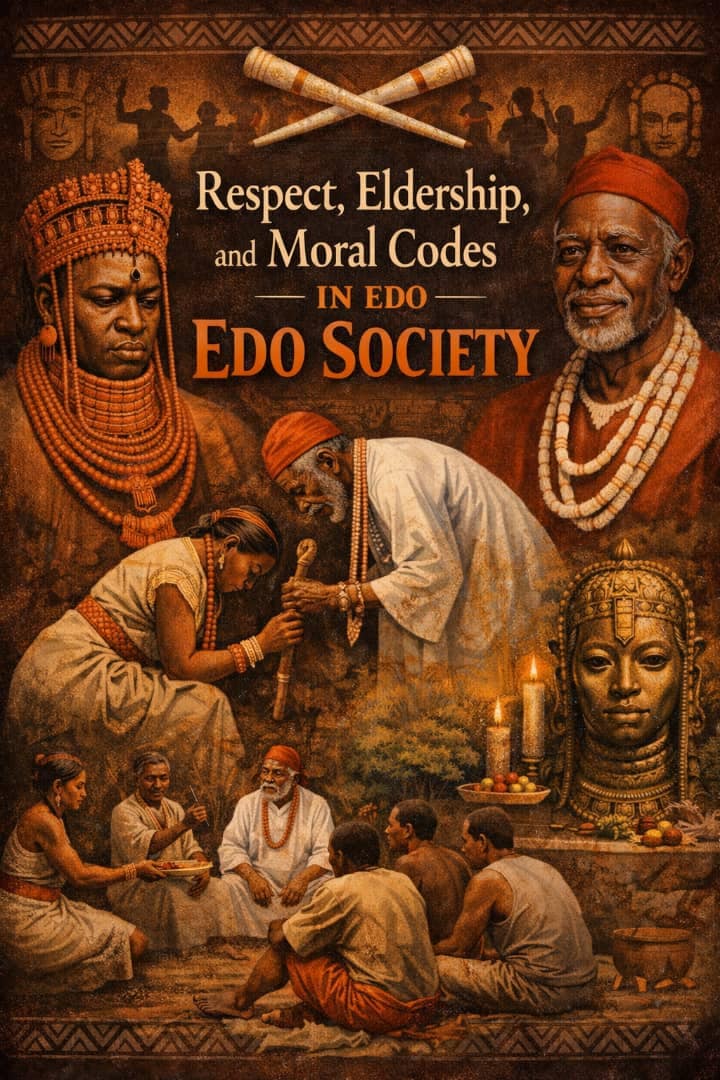
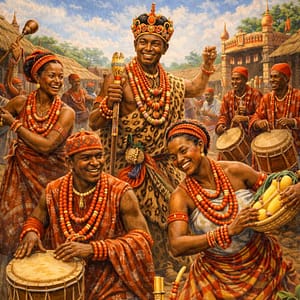
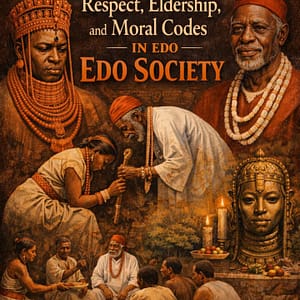
Respect, eldership, and moral codes are foundational elements of Edo society, guiding interpersonal relationships, social conduct, and community cohesion. Rooted in centuries of tradition and the historical structures of the Benin Kingdom, these principles govern behavior within families, age-grade groups, and communities. Elders serve as custodians of knowledge, moral exemplars, and mediators, ensuring that ethical standards and social norms are maintained across generations. Through rituals, proverbs, storytelling, music, and dance, Edo society conveys moral lessons and reinforces respect for authority, community, and ancestry.
Family and communal structures play a critical role in transmitting these values. The extended family system and age-grade groups provide mentorship, supervision, and guidance, fostering respect, ethical behavior, and social responsibility from a young age. Ceremonies and festivals, including births, marriages, initiations, and funerals, serve as both cultural expressions and educational platforms, embedding moral instruction in lived experience. Elders mediate conflicts, enforce customary law, and guide community interactions, ensuring that morality and social harmony are upheld.
In contemporary Edo society, modernization, urbanization, education, and digital media present both challenges and opportunities for preserving these traditions. Adaptations through schools, cultural workshops, mentorship programs, and online platforms allow moral education and respect for elders to remain relevant for younger generations. Edo society demonstrates that the principles of respect, eldership, and moral codes are not static relics but living traditions, sustaining cultural identity, ethical conduct, and intergenerational continuity even in the face of modern pressures.


Reviews
There are no reviews yet.