
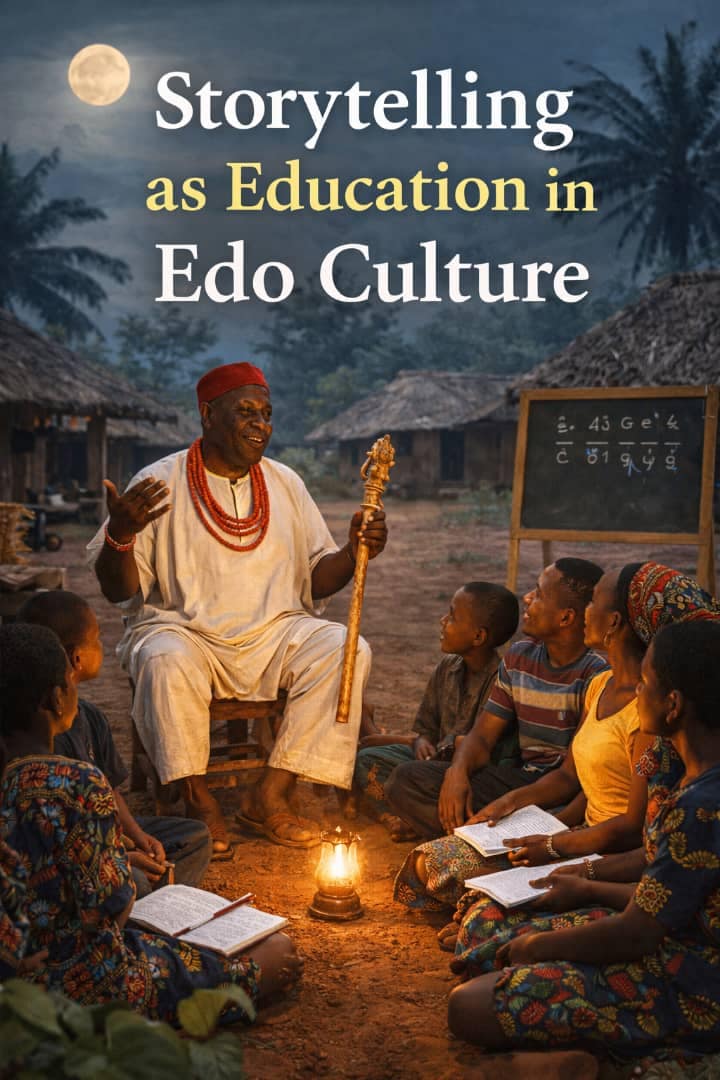
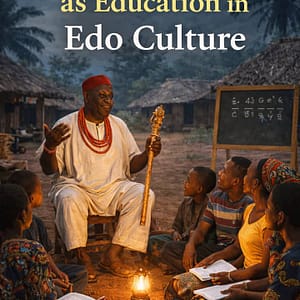
Storytelling in Edo culture functions as a foundational educational system through which knowledge, values, history, and worldview are transmitted across generations. Long before formal schooling, Edo society relied on oral narratives as structured tools for teaching morality, social responsibility, spiritual awareness, leadership ethics, and communal identity. Through folktales, myths, historical narratives, and moral parables, storytelling served as an informal yet highly effective curriculum that shaped character, intellect, and behavior within a communal learning environment.
This article examines storytelling as a holistic pedagogical framework in Edo culture, analyzing its forms, methods, and educational purposes. It explores how stories were used to teach moral discipline, respect for elders, communal harmony, gender balance, leadership accountability, and philosophical concepts such as destiny (ehi), justice, and continuity of life. Emphasis is placed on the performative and participatory nature of storytelling, which enhanced memory, critical thinking, emotional intelligence, and language development while reinforcing cultural values and social cohesion.
The study further addresses the impact of colonialism, modern education, and urbanization on Edo storytelling traditions, highlighting the challenges these forces pose to indigenous knowledge systems. It argues for the preservation and revitalization of storytelling through family practice, educational integration, and digital documentation. Ultimately, the article affirms that Edo storytelling remains a vital educational resource whose principles offer valuable insights for contemporary value-based education and cultural sustainability.

Reviews
There are no reviews yet.