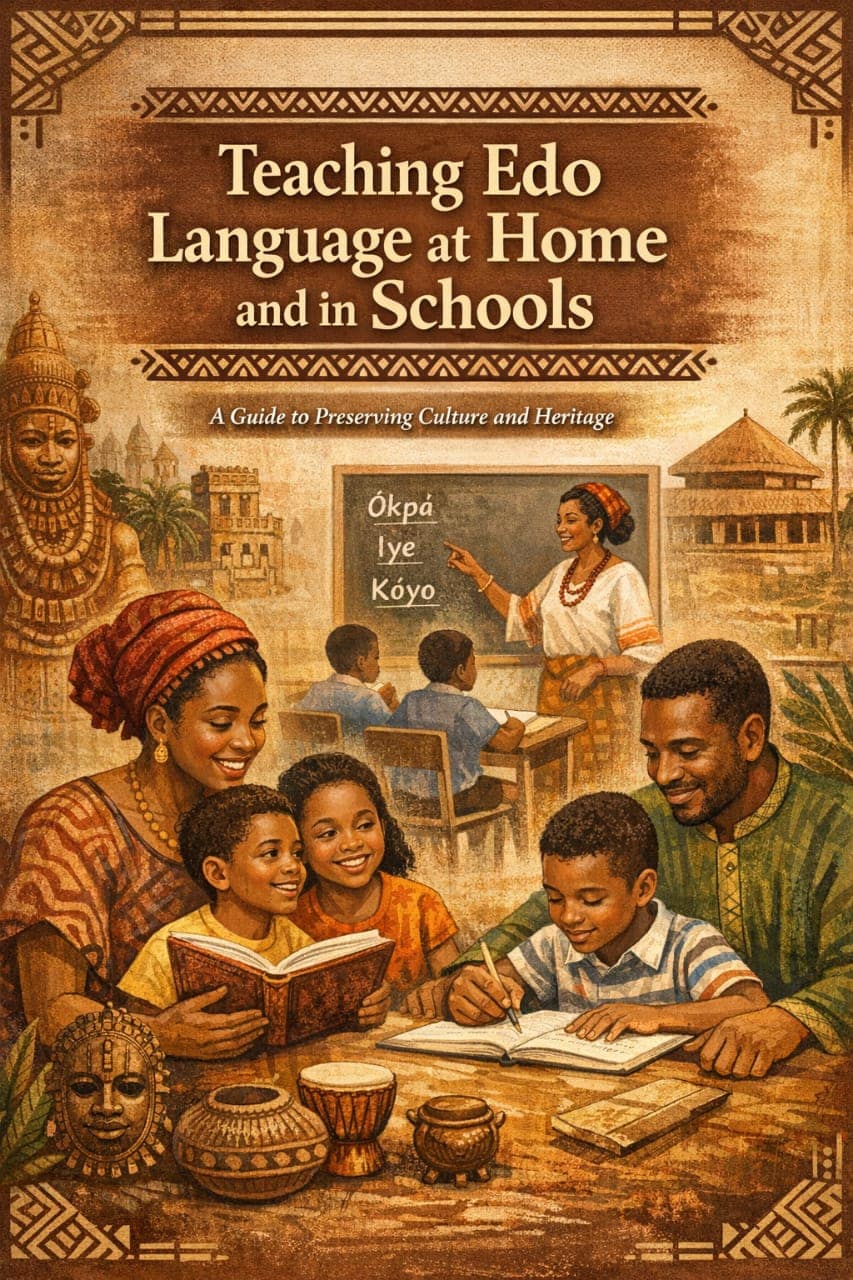
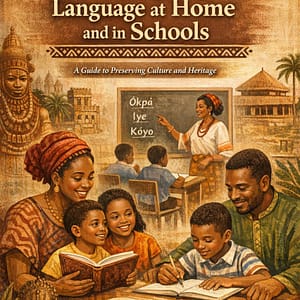
The Edo language, spoken primarily in Edo State, Nigeria, is a critical component of the Edo people’s cultural identity and heritage. Teaching Edo at home and in schools is essential for preserving traditions, moral values, and social cohesion. This article explores the significance of Edo language education, highlighting its role in fostering cultural pride, intergenerational communication, and cognitive development in children and youth.
The article provides practical strategies for teaching Edo across different contexts, including vocabulary development, grammar, dialogues, storytelling, songs, and proverbs. It emphasizes the integration of traditional learning methods with modern approaches such as digital tools, audio-visual resources, and interactive exercises. Detailed examples for home and classroom settings are provided to guide learners, educators, and parents in creating immersive and engaging language experiences.
Finally, the article addresses challenges such as the dominance of English, urbanization, and diaspora learning, offering solutions to promote consistent practice, cultural immersion, and language preservation. By combining structured lessons, cultural engagement, and modern tools, learners can acquire fluency in Edo while maintaining a deep connection to their heritage, ensuring that the language thrives for generations to come.
Reviews
There are no reviews yet.