
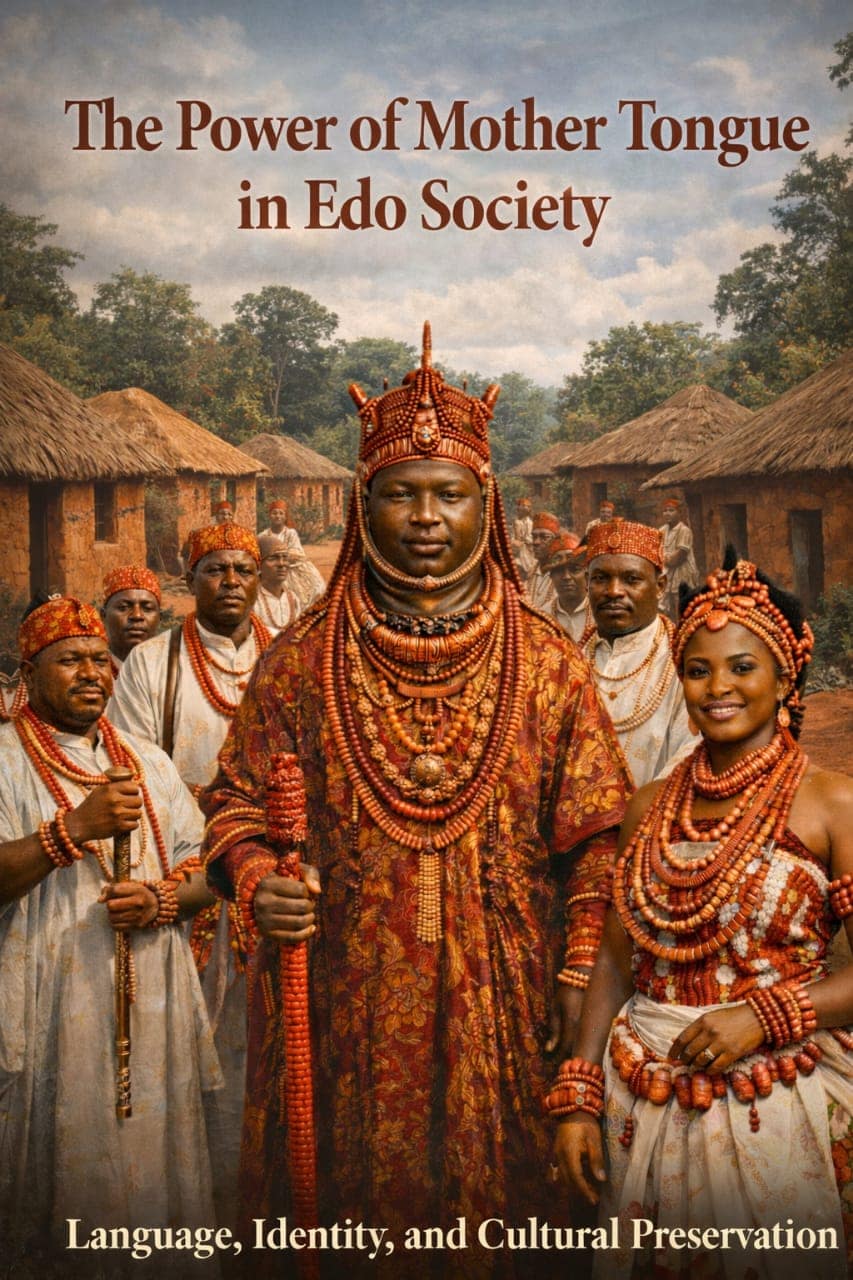
This article examines the power of the mother tongue within Edo/Benin society, emphasizing the Edo language as a central pillar of identity, culture, and belonging. Rooted in the history of the Benin Kingdom, the Edo mother tongue is presented not merely as a means of communication but as a living repository of values, ancestry, social order, and worldview. Through language, Edo people transmit history, name identity, and sustain communal relationships.
The study explores the cognitive, educational, cultural, and spiritual significance of the Edo mother tongue, highlighting its role in early childhood development, traditional education, moral instruction, and ritual life. It analyzes how colonialism and modernization disrupted indigenous language transmission, leading to declining fluency and weakened intergenerational connections, while also demonstrating that strong mother-tongue foundations enhance learning, cultural confidence, and multilingual competence.
Finally, the article addresses contemporary challenges and opportunities for Edo language preservation in Nigeria and the diaspora. It argues that intentional family use, mother-tongue-based education, supportive policy, and digital innovation are essential for revitalization. The article concludes that safeguarding the Edo mother tongue is both a cultural responsibility and a pathway to sustainable identity, dignity, and continuity for future generations.


Reviews
There are no reviews yet.