
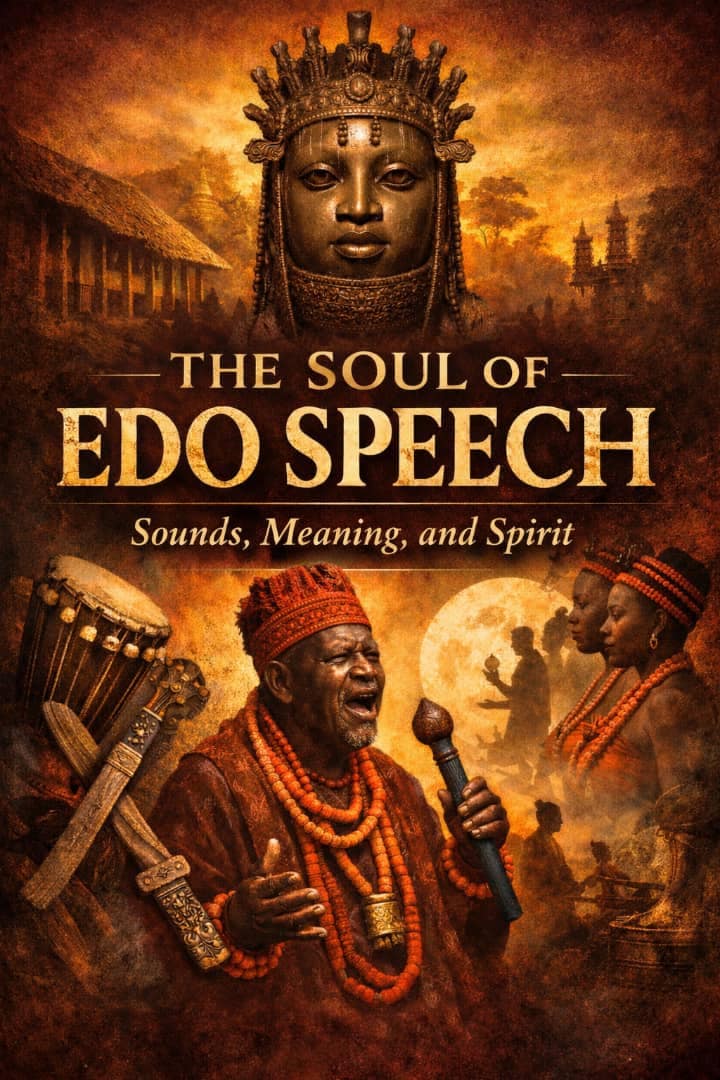
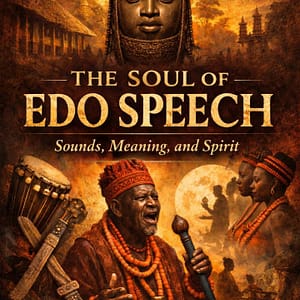
Edo speech represents far more than a system of verbal communication; it is a living cultural force that embodies the history, identity, and worldview of the Edo people of southern Nigeria. Rooted in the ancient Benin Kingdom, the Edo language developed as a tonal, rhythmic, and symbolically rich medium through which governance, social order, artistic expression, and collective memory were sustained. Its sonic qualities—tone, rhythm, silence, and intonation—give Edo speech a musical and expressive depth that links spoken language to drumming, song, and ritual performance.
This article explores the semantic and cultural dimensions of Edo speech, showing how meaning is encoded through proverbs, storytelling, naming practices, honorifics, and speech etiquette. Edo words function as cultural containers, preserving moral philosophy, social relationships, indigenous knowledge systems, and environmental wisdom. Through oral narratives and proverbial language, Edo speech transmits ethical values, conflict-resolution practices, and communal identity across generations, reinforcing cohesion and continuity within Edo society.
The article further examines the spiritual dimension of Edo speech, emphasizing the belief that words possess power and sacred efficacy. Ritual language, prayers, and invocations rely on precise Edo expressions to maintain spiritual connection with ancestors and the unseen world. In the face of colonial disruption, globalization, and declining intergenerational transmission, the article argues that preserving Edo speech is both a cultural and moral imperative. Safeguarding its sounds, meanings, and spirit ensures the survival of Edo heritage, identity, and worldview in a modern and globalized context.
Reviews
There are no reviews yet.