
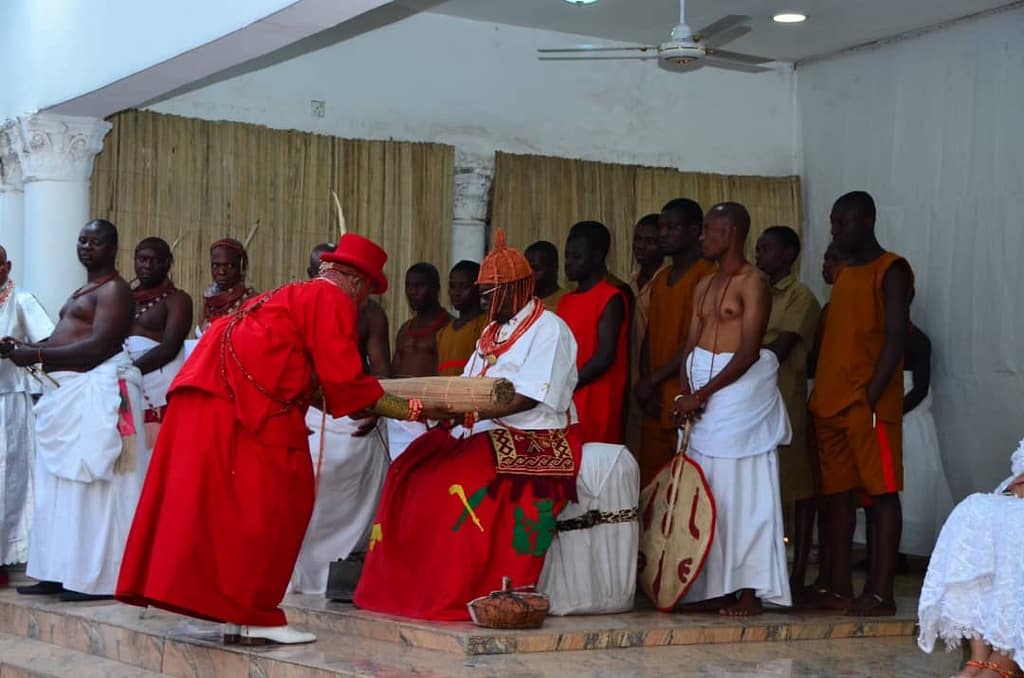
Celebration of the Igue fastival
THE IGUE FESTIVAL OF BENIN The Igue Festival (also spelled Ugie) of the Benin Kingdom in what is today Edo State, Nigeria, stands as one of the most enduring cultural traditions in West Africa. Celebrated annually, typically in late December between Christmas and the New Year, the festival combines thanksgiving, spiritual renewal, ancestral veneration, and community unity. It is both a royal rite and a communal celebration — sacred, celebratory, and deeply symbolic. At its core, Igue is not merely a moment of cultural display; it represents the spiritual heartbeat of the Edo people — an annual affirmation that the land, its rulers, and its subjects are bound by history, tradition, and sacred continuity. The Ancient Roots of the Festival To understand Igue, one must first grasp its historical depth. Though modern calendars pin Igue to a December schedule, its origin predates these conventions. Some accounts trace Igue rituals to pre-Oba eras, when thanksgiving practices were already part of spiritual life among the early Benin inhabitants. These ancient observances were less structured but emphasized personal thanksgiving to the divine for protection and survival through the year. Where Igue truly takes shape — both culturally and structurally — is with the arrival of Oba Ewuare the Great, who reigned from approximately 1440 to 1473 A.D. According to tradition, Ewuare spent years fighting for his rightful throne, enduring betrayal, hardship, and exile. Upon his triumphant return and ascension as Oba — the supreme king of Benin — he vowed a yearly festival of thanks to Osanobua (God) and the ancestors for preserving his life and granting victory. Some versions of the story also link the festival to Ewuare’s marriage to a wife named Ewere, making the celebration a fusion of thanksgiving, renewal, and royal union. Over time, these stories expanded into the complex festival we know today. By the time of later Obas, especially in the 20th century under Oba Akenzua II, Igue was refined into a season of multiple rites and ceremonies, rather than a single event — marking the end of one year and the ushering in of another. The Benin Kingdom: A Brief Historical Context To appreciate Igue fully, you also need to understand the Benin Kingdom’s profound historical legacy. The Benin Kingdom, located in southern Nigeria, was one of the most advanced pre-colonial African states. Renowned for its intricate bronze art, structured governance, military prowess, and robust spiritual systems, Benin’s monarchy was not only political but deeply spiritual — merging religious authority with civic leadership in ways that shaped festivals like Igue. The Oba (king) was more than a political figure; he was considered an intermediary between the divine and human worlds. This belief shaped the structures of royal rituals, festivals, ancestral worship, and community life. Over centuries, these traditions endured — even through colonial incursions and modern transformations — affirming Benin’s cultural resilience. Spiritual Foundations of Igue Cosmology: Head, Ancestors, and Divine Order Central to Igue is a distinctive Edo cosmology — a worldview where the head (uhunmwun) is more than a physical organ; it is the seat of destiny, identity, and spiritual connection. The popular Igue Uhunmwun ritual refers to purification and thanksgiving centered on the head — affirming life, purpose, spiritual protection, and renewal for the year ahead. For Edo people, the head symbolizes one’s inner life and destiny. The festival, then, becomes an expression of reverence for life itself — but not just as individuals. It is a cosmic renewal: connecting individuals, ancestors, and the divine. That is why the Oba — as the spiritual custodian — plays a central role. Ancestors and the Living Community Another foundational principle of the Igue Festival is ancestral veneration. The Edo worldview acknowledges that ancestral spirits remain active agents in the lives of the living — influencing prosperity, health, community harmony, and spiritual well-being. Igue thus becomes a moment not just of renewal, but of reciprocal acknowledgment: the living thank the ancestors, while seeking their blessings and guidance for the future. During the festival cycle — particularly in rites like Ugie Erha’Oba — the Oba offers homage to former kings and queen mothers, embodying continuity with the lineage of rulers who came before. This ceremonial remembrance reinforces the idea that the kingdom is part of an unbroken chain of spiritual and social stewardship. Religion and Belief: Integration and Interpretation One of the remarkable aspects of Igue is how it survives in a region dominated today by Christianity and Islam. While these world religions are widely practiced, many Edo people interpret Igue not as “pagan worship,” but as a cultural thanksgiving event — compatible with themes of gratitude, peace, and renewal found in most faiths. The spiritual language of Igue — blessing, thanksgiving, divine protection — resonates broadly. Even some Christian leaders in Benin have acknowledged the festival’s deeper moral values, focusing on unity, peace, and community strength. Cosmology, Spiritual Philosophy, and Religious Foundations Edo Cosmology and the Sacred Order of Existence At the heart of the Igue Festival lies a deeply structured Edo cosmological system—a worldview that explains the nature of existence, destiny, authority, and continuity. Unlike linear Western metaphysical models, Edo cosmology is cyclical, emphasizing renewal, balance, and reciprocal relationships between visible and invisible realms. The universe, in Edo thought, is divided into three interconnected spheres: 1. Agbon – the physical world of the living 2. Erinmwin – the spiritual realm of gods and ancestors 3. Ehi – the personal spiritual essence or destiny of an individual These realms are not separate; they overlap continuously. Human life succeeds when harmony exists among them. The Igue Festival functions as an annual realignment ritual, restoring balance disrupted by time, conflict, or misfortune. Osanobua: Supreme Deity and Moral Authority Central to Edo spirituality is Osanobua, the supreme creator deity. Osanobua is not represented through idols or images but is understood as an omnipresent moral force governing truth, justice, and order. During Igue, thanksgiving is ultimately directed toward Osanobua: 1.
Celebration of the Igue fastival Read More »